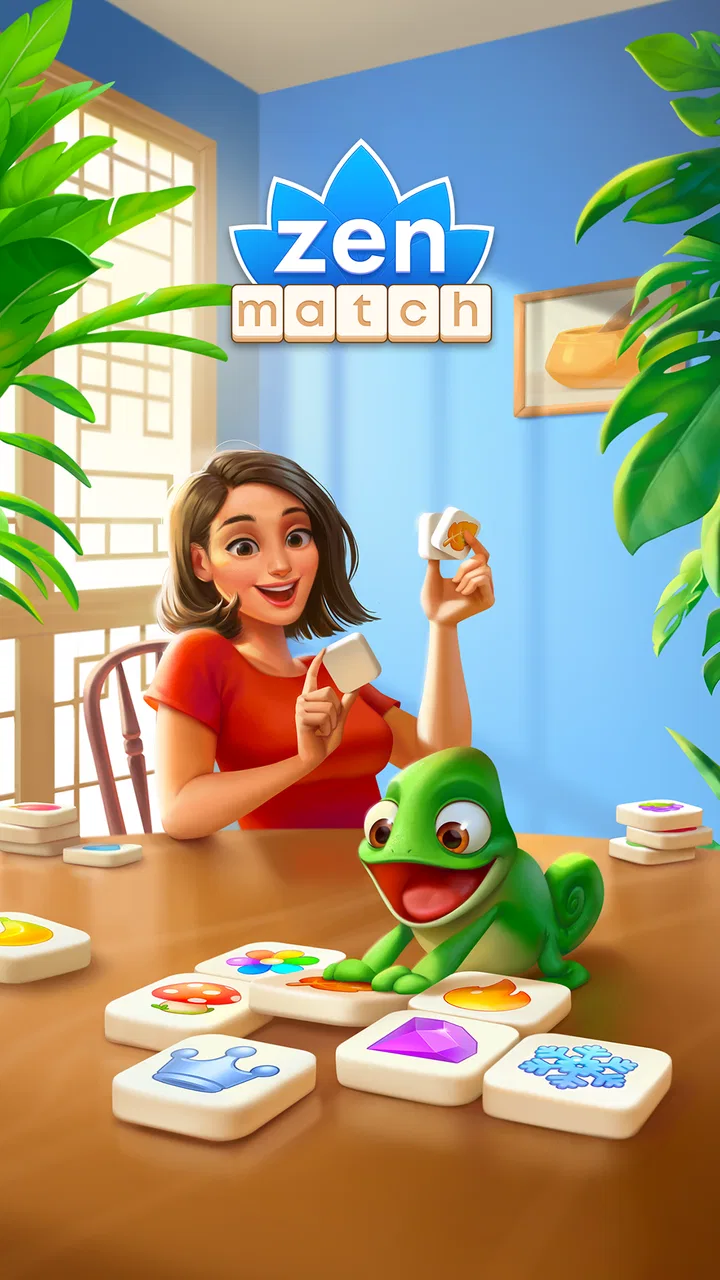
Zen Match
- 4.6
- Rating
- 10.00M
- Installs
- Free
- Price

 Analysis by App-foxy
I found Zen Match easiest to appreciate in the small gaps of a shared household: while waiting for dinner, during a quiet coffee, or when someone else is using the television and I want a calm game that does not demand a long session. It is a free puzzle game from Moon Active built around matching mahjong-style tiles, with peaceful scenery giving the activity a softer mood than a typical time-pressured puzzle.
That calm presentation is the first thing that separates it from many alternatives. The game is not trying to turn every round into a frantic test of reflexes. Instead, I spend my attention scanning the board, identifying available pairs, and deciding which match will keep the layout manageable. The basic idea is familiar, but the combination of tile-clearing puzzles and relaxing landscapes makes it feel more like a short mental reset than a conventional arcade challenge.
It is also a game that can sit comfortably on a device used by more than one person, provided everyone understands that progress and preferences belong to the person playing. I would not treat it as a shared family account or a cooperative activity. It works better as a pass-the-phone puzzle: one person plays for a few minutes, then hands the device back without expecting the next player to continue the same plan.
You May Also Like

 Blood Strike: 2.5 Anniversary
Blood Strike’s Loadouts Turn Every Drop Into a Tactical Gamble
A close look at Blood Strike’s custom loadouts: how fast access to signature weapons reshapes its battle royale rhythm, rewards preparation, and narrows the gap between fights.

 Pandora - Music & Podcasts
Pandora’s Music Is Easy to Start, but Harder to Recover
Pandora’s strength is its low-effort path from a seed to a station. Its weak spot is how much confidence it asks you to place in connection, setup, and quiet recovery.

 8 Ball Pool
 Is Built on Rivalries, Rematches, and Routine
A close look at the rivalries, rematches, shared routines, and unanswered safety questions that turn a quick pool match into a persistent mobile community.

 Samsung Music
’s Quiet Strength Is Playing What You Already Own
Its reach comes less from spectacle than from dependable access to a personal library. That simplicity is both the app’s strongest retention engine and its ceiling.

 AccuWeather: Weather Radar
AccuWeather Review: A Quick, Clear Forecast for Everyday Decisions
For everyday plans, the best forecast is the one you can understand quickly. AccuWeather makes rain timing, radar, and local conditions easy to act on, with a few trade-offs.

 Hill Climb Racing
Why Hill Climb Racing Still Turns Crashes Into One More Run
A tiny car, a bumpy hill and one more upgrade: Hill Climb Racing keeps resurfacing because its simple chaos makes every near-miss feel personal.
More From Our News Desk
View All News


How Zen Match fits into a shared household
In my experience, the best household use is informal rather than competitive. One person can open a puzzle during a break, stop when attention is needed elsewhere, and leave the device available for another person. That makes it more flexible than games that require a team, a live opponent, or a fixed appointment. A parent waiting in a pickup line, a partner relaxing after work, or a teenager taking a screen break can all use the same installation at different times.
There is a small but important distinction between sharing a device and sharing a game session. Tile matching is personal: I may notice a useful pair that another player would miss, or I may deliberately leave a certain tile untouched because I am planning several moves ahead. If someone takes over halfway through, they may not understand the board I was building. For that reason, I recommend treating each handoff as a fresh turn in spirit, even if the game itself remains open.
This arrangement avoids an unnecessary source of tension. Nobody has to wait for a multiplayer invitation, compare performance, or agree on a strategy. The game provides a quiet individual activity that happens to work well in a common room. If your household wants a game everyone can solve together on the same screen, this is not the strongest choice; its appeal comes from concentrating alone, not coordinating simultaneous decisions.
The scenery helps with that shared-device role. The visual atmosphere is gentle enough that it does not feel intrusive when played near other people, and the landscapes give the experience a sense of progress beyond simply clearing another board. I still would not call it completely passive. The board requires attention, and a conversation or interruption can make it easier to overlook a useful move.
What to agree on before another person plays
Because Zen Match is free to download but includes optional purchases ranging from $0.99 to $349.99 per item, I would set a household rule before handing the phone to a child or another family member. The practical rule is simple: nobody buys anything without asking the device owner first. That conversation matters more than the relaxing presentation, because a calm puzzle can still sit inside a monetized mobile game.
I would also decide whether the device is being used for a quick break or for a longer personal session. The game is easy to pick up, which can make “just one puzzle” turn into a more extended period of play. On a shared phone or tablet, a basic handoff agreement prevents frustration: finish the current decision if possible, then close the game or clearly say that the board is being left in progress.
There is no advantage in pretending that everyone will enjoy the same pace. A younger player might make quick matches, while an adult may prefer to study the layout carefully. The game accommodates those different attitudes because its central action is straightforward, but the household still benefits from separating turn-taking from performance. I would avoid presenting it as a test of who is cleverest.
Setup, boundaries, and the first few sessions
Zen Match is available at no upfront cost, and it is rated for Everyone. Those details make it approachable for a broad household, but they should not be confused with a complete family-management solution. The age label tells me the general content is suitable for a wide audience; it does not replace an adult’s decision about screen time, purchases, or whether a particular child is ready to use a shared device independently.
Before letting someone else play, I would check the device’s purchase protections and make sure the owner knows which account is active. That is especially sensible when the same phone is used for work, school, entertainment, and payments. I am not suggesting the game is difficult to set up. I am saying that shared hardware creates its own boundaries, and those boundaries should be handled at the device level rather than assumed to be part of the puzzle.
The game was released on November 18, 2020, and the current version is 220000.1.762. If I were preparing an older household device for it, I would pay attention to compatibility because the minimum operating system is Android 6.0. That makes the game accessible to many older Android devices, although actual comfort still depends on the screen, battery condition, and how many other apps are running.
For a first session, I would not teach it as if it were a traditional mahjong table game. The useful starting point is to explain that the objective is to match available tiles, then encourage the player to look across the whole arrangement before tapping. That small habit is more valuable than rushing through the first few moves. It also makes the game easier to share, because the next person can understand the board without needing a long explanation.
Coordination without turning the game into homework
The most useful coordination technique I found is to keep spoken advice limited. If two people stare at the board and call out every possible pair, the relaxing quality disappears quickly. A better approach is for the active player to name the kind of help they want: a second opinion about a move, a reminder to scan the edges, or simply quiet company. This preserves the individual nature of the puzzle while still making it pleasant to watch.
For households with several players, I would use informal time windows rather than a score table. A short turn before breakfast, a break after school, or a few minutes before bed creates a predictable rhythm without making the game feel like an obligation. Since the game is designed for individual puzzle play, a shared score competition can add pressure that the presentation does not really need.
Another practical tip is to leave the board in a recognizable state. If someone must stop midway, they can point out the last area they were examining rather than explaining every plan. This matters because matching puzzles depend on visual context. A player returning after an interruption may make a different choice, but at least they can begin from an understandable position.
I also found that the game suits quiet companionship better than active collaboration. Two people can sit together, with one playing and the other occasionally noticing a match, but the person holding the device should make the final decision. That keeps the experience from becoming an argument over the “correct” move. In a household, this is a small design advantage: it supports togetherness without requiring the game to pretend it is multiplayer.
The puzzle rhythm and where it differs from alternatives
Compared with a match-three game, Zen Match feels less explosive and less dependent on chaining effects. Match-three alternatives usually reward rapid pattern recognition, cascading pieces, and a more visibly energetic response to each move. Here, the pleasure comes from clearing mahjong-style tiles and keeping the board readable. I prefer this when I want to slow down, but I would choose a match-three game when I need immediate feedback or a more animated sense of momentum.
Compared with a traditional digital solitaire game, the tile layout gives Zen Match a different kind of visual search. Solitaire asks me to manage cards and sequences, while this game asks me to recognize matching tiles and consider what remains accessible. Neither is automatically deeper; they simply exercise attention in different ways. Someone who enjoys card planning may find solitaire more strategically transparent, whereas someone who likes visual sorting may settle into this game more naturally.
It also differs from classic mahjong software in an important practical sense: I approach it as a modern mobile puzzle rather than as a full recreation of a tabletop or tile-set tradition. That makes it easier to pick up casually, especially for a person who has never played mahjong. On the other hand, players seeking a formal rules-based mahjong experience should look elsewhere, because the appeal here is the matching puzzle and its relaxing presentation.
The landscape theme is more than decoration for me because it changes the emotional temperature of the session. It does not make difficult decisions disappear, but it gives the game a gentler frame. The trade-off is that players who want constant novelty, dramatic effects, or a strong competitive ladder may find the presentation too subdued. Zen Match is at its best when calm is part of the goal, not when calm feels like a lack of action.
Age, trust, and the limits of the family angle
The Everyone rating makes it reasonable to consider for mixed-age households, especially when an adult wants a puzzle without violent imagery or an intimidating control scheme. The tile-matching concept is easy to demonstrate, and the game does not require a child to understand complicated controls before making a first move. I would still play alongside a younger user at least once, because suitability depends on the child’s patience and the family’s screen-time expectations as much as on the rating.
Trust is more relevant than supervision of the puzzle itself. The main household questions are who owns the device, who can access the active store account, and whether in-app purchases require approval. I would not assume that a child understands the difference between progressing in a game and spending real money. A short explanation before play is enough: tiles are free to match, but optional items may cost money, so purchases require permission.
I also would not describe Zen Match as an educational tool simply because it involves concentration. It can be a pleasant way to practice visual attention, but its primary purpose is entertainment and relaxation. That distinction helps parents set realistic expectations. If the goal is structured learning, a dedicated educational app is likely a better fit; if the goal is a calm puzzle that a child can understand quickly, this game is more suitable.
For adults sharing a tablet, the concern may be less about age and more about personal space. A board left open can invite unsolicited advice, and a family member may accidentally interrupt a carefully considered session. I recommend agreeing that the person who starts the puzzle controls the turn. That simple boundary preserves trust and prevents a harmless game from becoming a recurring household annoyance.
Where the free model creates friction
The free entry point is a genuine strength because I can try the core experience before deciding whether it belongs on my device. At the same time, the presence of in-app purchases means I would not call it a completely consequence-free download for a shared phone. The highest listed item price is substantial, so purchase controls are not a minor detail. I would make that check before allowing unsupervised play, not after an accidental transaction.
Another trade-off is the game’s deliberately measured pace. I enjoy it when I want to settle my attention, but I can imagine feeling impatient if I am looking for a quick burst of action. The same visual calm that makes it comfortable beside other people may seem slow to someone who prefers bright effects and constant rewards. This is not a flaw in execution so much as a question of matching the game to the moment.
It is also not ideal for every kind of shared use. There is no reason to choose it for a family tournament, a party, or a group activity where everyone needs an active role. It works better when one person plays and others respect the turn. If your household wants direct competition, cooperative objectives, or a game that naturally creates conversation, a different puzzle format will probably serve you better.
Finally, the game’s appeal depends on enjoying repetition with variation. Matching tiles is simple to understand, but players who need a strong narrative, character development, or a constantly changing rule set may lose interest. I would recommend it to someone who values a reliable mental routine rather than someone searching for a large adventure on a phone.
Who should install it, and who should skip it
I would recommend Zen Match to a person who likes visual puzzles, wants a calmer alternative to fast match-three games, and appreciates being able to play alone for a short stretch. It is particularly well suited to a shared household where people take turns informally and do not need the game to support direct cooperation. The free starting price also makes it easy to test without committing immediately.
I would be more cautious about recommending it to anyone who dislikes optional purchases in mobile games, even when they can be ignored. That person may find the surrounding monetization distracting. I would also point competitive players toward another category, because the game’s strongest quality is its relaxed concentration rather than head-to-head excitement.
For a child, I would consider it only alongside sensible device rules. The Everyone rating and simple matching idea are reassuring, but adult oversight of purchases and screen habits still matters. For a couple or family looking for a shared evening activity, I would frame it as a quiet side game rather than the main event. One person can play while another talks, reads, or watches, but it will not replace a genuinely collaborative board game.
My household verdict after living with the game
Moon Active has made a puzzle that is easy to understand without making it feel completely disposable. The tile layouts give me something to examine, while the landscapes keep the mood gentle. Its strongest use is as a personal pause that can coexist with household life: short sessions, quiet handoffs, and no need to gather everyone around the screen at once.
The game’s popularity is reflected in its 4.6 average from around 587 thousand ratings, and it has passed 10 million installs. Those figures do not decide whether it belongs on your phone, but they fit my impression that the concept is accessible and broadly appealing. I would still judge it by your household’s needs rather than by its reach.
My final recommendation is positive, with one clear condition: install it for the calm matching experience, and establish purchase boundaries before sharing the device. I would choose it over a noisier puzzle when I want to unwind, and over a traditional card game when I want visual tile matching without learning a formal ruleset. I would skip it for multiplayer nights or for anyone who needs constant action.
As a free puzzle rated for Everyone, running from Android 6.0 onward and currently listed as version 220000.1.762, it is approachable for many devices and age groups. For me, its real value is not that it fills every kind of gaming moment. It fills one specific moment well: when I want a focused, peaceful puzzle that can fit around other people without demanding the whole room’s attention.
FAQs for Zen Match
01What is Zen Match, and how do you play it?
Zen Match is a relaxing tile-matching puzzle game built around the classic mahjong-style mechanic. You tap matching tiles to place them in a limited tray, then clear groups of three identical tiles. The objective is to remove every tile from the board without filling the tray. As levels progress, layouts become more complex and introduce obstacles, making careful planning more important than simply tapping quickly.
02Is Zen Match free to download and play?
Zen Match can generally be downloaded and played for free on compatible Android and iOS devices. However, the game includes optional in-app purchases, which may provide coins, boosters, extra chances, or other helpful items. Progress is possible without spending money, although some players may encounter advertisements, waiting periods, or challenging levels that encourage optional purchases.
03Does Zen Match require an internet connection?
Many of Zen Match’s basic puzzle features may remain available when you are offline, which is convenient for playing during travel or in areas with limited connectivity. Nevertheless, an internet connection may be required for advertisements, cloud-related features, events, updates, purchases, and synchronization. Availability can vary by device version, so it is best to test offline access after installing the game.
04Are there advertisements or in-app purchases in Zen Match?
Yes, Zen Match uses advertising and optional in-app purchases as part of its free-to-play model. Advertisements may appear between levels or can sometimes be offered in exchange for rewards, while purchases may help with boosters, coins, or additional attempts. Before downloading, parents and users should review device purchase settings, especially if the game will be used by children.
05Is Zen Match suitable for children and casual players?
Zen Match is easy to understand and generally suitable for casual players who enjoy calm, short puzzle sessions. Its colorful tile designs and gradual difficulty make the opening levels approachable, although later stages can require concentration and strategic thinking. Parents should still check the current age rating, advertising content, privacy information, and purchase controls before allowing younger children to play.
Pros
- Relaxing tile-matching gameplay suitable for short sessions.
- Simple controls make it easy for new players to learn.
- Levels gradually introduce more challenging layouts.
- Offline play is available for many gameplay sessions.
- Calm visuals and sound create a soothing atmosphere.
Cons
- Limited moves can make some levels feel frustrating.
- Hints and extra moves may encourage in-app purchases.
- Gameplay can become repetitive after extended play.
- Ads may interrupt the experience between levels.
- Progress and features can vary between device versions.

Zen Match
Gallery